09/09/2026 | News
Formalization Workshop: Dialogue and Practical Tools to Advance Responsible Mining
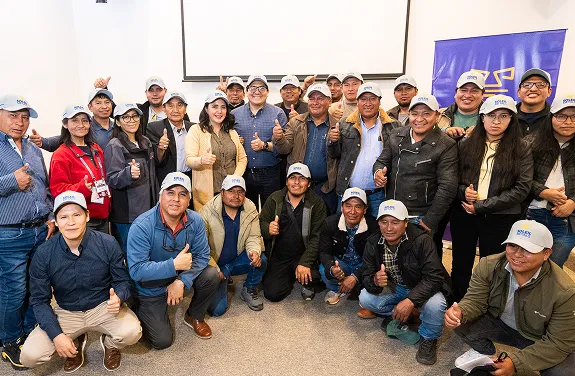
Soleil Metals and Swiss Better Gold held a mining formalization workshop in Cusco for producers link
 Soleil Metals
The country faces one of the greatest challenges in artisanal mining globally, but at the same time possesses unique conditions to address it: a network of mercury-free processing plants, a formalization registry, and the capacity to contain organized crime. This combination of scale and viable solutions makes Peru the ultimate testing ground to demonstrate that traceability and compliance in the sector can be a reality.
Artisanal and small-scale mining (ASM) is one of the central paradoxes of the global gold industry. It accounts for roughly 20% of the world’s gold and sustains close to 20 million livelihoods, yet it remains structurally excluded from formal markets because of compliance barriers. In Peru, that paradox is especially acute and especially consequential. ASM miners generate around a quarter of the country’s gold exports and the sector supports more than 300,000 producers, but a large part of that gold still moves through informal or illegal channels.
This situation is precisely what makes Peru the decisive proving ground. The same country whose name is often tied to illegal gold and mercury is also one that holds the ingredients of a solution. A study on processing plants across six artisanal mining countries, commissioned by the World Gold Council and carried out by Levin Sources in 2025, is explicit that Peru is one of the very few contexts where the model can actually work. It is just as explicit that these conditions are necessary, not sufficient. The REINFO registry, for one, has documented weaknesses, such as “billing agents” who rent out their legal status to illegal operators. That is why Peru should be considered as a test bed rather than a finished success: the ingredients are on the table, but someone still has to prove they can be combined into responsible gold.
This approach was further strengthened by the recent partnership between OCIM Metals and Mining SA, part of OCIM Group, and the World Gold Council to advance the formalization of the ASGM sector. The agreement aims to develop international standards for processing plants, strengthen supply chain traceability, and facilitate responsible gold’s access to formal markets. OCIM will contribute the operational experience gained through Soleil Metals in Peru to help develop models that can be replicated in other countries.
That is the demonstration underway in Arequipa. Soleil Metals, a subsidiary of OCIM, operates the Yacari and Victoria processing plants, with a combined authorized capacity of 450 tonnes per day, and has built a documented passage between small-scale Peruvian producers and European institutional buyers. It is, in effect, the working proof that Peru’s potential can be turned into responsible gold.
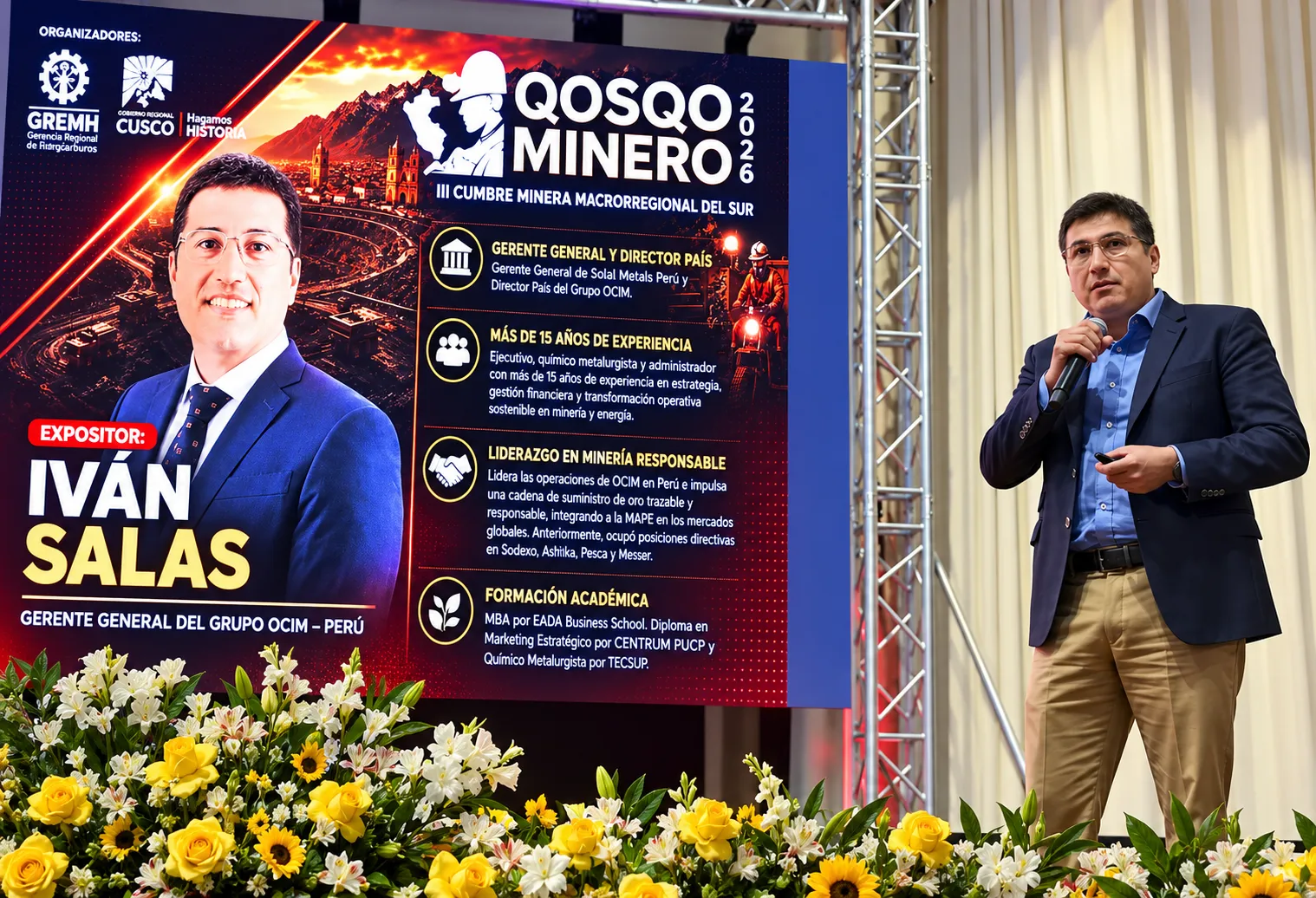
“The real challenge of formalization isn’t solved behind a desk, but in the day-to-day operations on the ground. In Peru, we have the technology, the legal framework, and the technical capacity to process more efficiently and cleanly, but the essential ingredient is mutual trust with artisanal miners,” stated Iván Salas, Country Manager of Soleil Metals.
Three lessons from Peru’s experience
The proof on the ground
Two concrete results anchor this account. First, Soleil Metals has completed a gold delivery whose origin was verified with xTrace technology, developed by the Swiss software company aXedras, which combines chemical fingerprinting, spectrometry and a tamper-resistant record to confirm that the metal reaching the refinery matches its declared origin. The shipment travelled from the mine in Arequipa to Argor-Heraeus in Switzerland, one of the refiners on the London market’s Good Delivery list, the benchmark of trust for the global gold trade.
Second, the Yacari and Victoria plants have been declared compliant with Step 1 of Swiss Better Gold’s accreditation program, a public-private scheme that links responsible artisanal producers to the Swiss market. Step 1 is an audited point of entry on a longer trajectory rather than a finish line, which is how responsible gold should be understood: not a binary label, but a documented commitment with a firm floor and a path that is verified over time.
Underpinning all of this is a simple economic fact confirmed by the World Gold Council study: a miner working alone with mercury recovers only 30% to 40% of the gold in the ore, against more than 90% at these plants. That gap is what makes the model affordable, giving a miner the income to formalize and abandon mercury without being pushed out of business.
“None of this makes Peru a finished model: the conditions exist, but it takes an operator willing to carry the compliance, the cost and the responsibility to turn them into responsible gold. That is why Peru matters to the rest of the world. What is proven here is what will define whether responsible artisanal gold can scale anywhere,” Salas from Soleil Metals concluded.